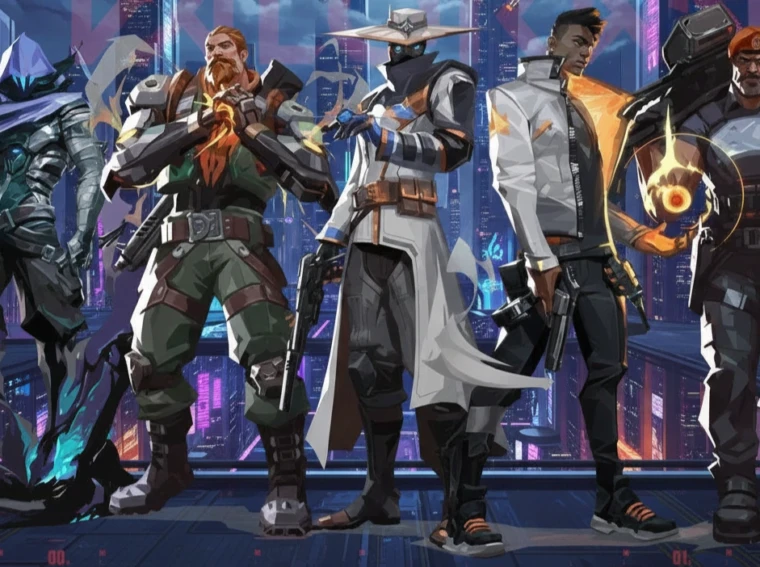
Ever felt like your aim is already good but your rank still refuses to go up? Or maybe you keep losing because your team isn’t in sync, the entry is messy, and rotations fall apart? Before blaming your teammates or the matchmaking system, take a step back. The biggest problem for beginners even up to Gold or Platinum is usually not mechanical skill, but the lack of understanding of the role they’re playing. Valorant isn’t a typical shooting game; it’s a tactical game built on role foundations. Players who understand their role automatically look far more “pro” than those who only rely on aim duels. That’s why learning Valorant’s roles is the most realistic shortcut to ranking up faster and playing more consistently.
As analysts who often review the gameplay of Indonesian players, we keep seeing the same pattern: most players don’t know what they’re supposed to do. Duelists don’t entry, Controllers use smoke carelessly, Initiators flash without coordination, Sentinels rotate too early and leave flank unguarded. Yet once each role is executed properly, the entire team composition instantly feels more alive pushes become cleaner, defense becomes stronger, and every round becomes far more controlled. This article breaks down the four main roles in Valorant with how to play them, meta agents, common mistakes, and how to choose the right role for your playstyle.
1. Duelist
Duelists are the spearhead of the attack. Their job is to enter first, create space, win duels, and generate momentum for the team to take a site. Playing Duelist effectively isn’t just about shooting first, but using utility to confuse opponents, entering with proper timing, and ensuring teammates can follow safely. Many players think a Duelist must always have the highest kills, but the real job is to open space for the team. Without proper entry, attacks will always fall apart.
In the current meta, agents like Jett, Reyna, Yoru, and Iso are top picks thanks to their mobility and space-taking ability. Jett excels at fast entries, Reyna thrives in 1v1 duels, Yoru enables aggressive rotations, and Iso performs well in chained duels. But beginner Duelists often entry without info, forget to use utility, or hesitate to start the push, weakening the team from the first second of a round. A great Duelist isn’t the one with the most kills, but the one who opens the door for their teammates.
2. Controller
Controllers shape the tempo of the game. They control space with smoke, walls, and vision denial, allowing their team to enter safely or delaying enemies on defense. Playing Controller requires game sense and understanding map layout. Smoke timing is crucial too early and it disappears before the entry, too late and your team gets stuck outside the site. Controllers also need to survive longer because their utility is key for post-plant or retake situations.
Agents like Omen, Brimstone, Viper, and Harbor each offer different strengths. Omen is flexible with long-range smokes, Brimstone is beginner-friendly, Viper dominates choke-centered maps, and Harbor provides dynamic walls for fast pushes. Beginner Controllers often place random smokes, forget to extend smokes in long pushes, or fail to adapt their utility to attack or defense. Effective Controllers dictate the game’s rhythm, making it hard for enemies to predict movements.
Read also: 5 Ways to Chat in Valorant Without Errors and Zero Hassle
3. Initiator
Initiators pave the way for the team. They gather information, pressure enemies out of strong positions, and create the best conditions for Duelists to entry. Playing Initiator demands strong timing utility must be used right when the team is ready to execute, not when everyone’s still standing still. Initiators must read enemy behavior and predict positions before throwing utility. The more precise the utility, the safer the team enters the site.
Agents like Sova, Skye, Fade, and Breach are highly effective in the current meta. Sova excels at long-range recon, Skye provides info and healing, Fade is strong at clearing corners, and Breach dominates narrow maps with stuns and flashes. But beginners often flash without comms, use recon in useless spots, or fail to match utility timing with team movement. A good Initiator exists to secure map control, not just add damage.
4. Sentinel
Sentinels are the anchors of the team. Their job is to guard areas, watch flanks, slow enemy pushes, and provide safety especially on defense. Playing Sentinel requires patience, good positioning, and map awareness. Sentinels must place utility strategically for information or delay. On the other hand, rotating too early leaves flanks wide open and makes the team vulnerable.
Agents like Killjoy, Cypher, Sage, and Deadlock continue to dominate. Killjoy provides strong automated setups, Cypher controls the map with traps and cameras, Sage offers healing and wall utility, while Deadlock reinforces narrow areas with strong defensive tools. Beginners often misplace traps, fail to use high-value positions, or lose focus on guarding flanks. When a Sentinel performs well, the entire team becomes safer and more structured.
Recommended Roles for Beginners
For new players or those in Iron to Silver, we recommend roles that don’t require high mechanics but still make a big impact. Sage is the most beginner-friendly thanks to simple, team-oriented utility. Brimstone is the easiest Controller with clear, straightforward smokes. Reyna suits players who want to focus on duels without complex lineups. Skye provides a balanced mix of support and aggression. These roles help beginners understand match flow without overwhelming mechanics.
Role Selection Checklist
Choosing the right role helps you find the most comfortable playstyle.
If you like aggressive plays and winning duels: choose Duelist.
If you enjoy reading situations and controlling match tempo: choose Controller.
If you like giving info and creating openings: choose Initiator.
If you prefer patience, security, and guarding areas: choose Sentinel.
Understanding your tendencies helps you decide which role will boost your performance the fastest.
Conclusion
Understanding Valorant roles is a key step to breaking out of rank stagnation. By mastering each agent’s responsibilities, maximizing utility, and executing role-specific tasks, your gameplay becomes much more stable and effective. Valorant isn’t about who shoots the fastest it’s about who understands their job the best. Want to climb faster? Master the role that fits your playstyle. Also check out more updates and recommendations on Diamorazone for deeper insights.